
Bamboo vs Rubberwood Desk: Which Desktop Material Should You Choose?
Choosing the right desktop material can completely change the look and feel of your workspace.
If you are comparing a bamboo desk with a rubberwood desk, both are attractive natural-material options, but they have different strengths. Bamboo tends to offer a clean, modern appearance with a distinctive linear grain, while rubberwood has a more traditional timber look with a warmer, softer visual character.
At Joy Desk, both bamboo and rubberwood are available as desktop options, so the question is not simply which material is “better”. The better choice depends on your workspace style, how you use your desk, how much maintenance you want, and the type of finish you prefer.
If you want the quick answer, use this guide to compare bamboo vs rubberwood for appearance, durability, maintenance, sustainability and standing desk use.
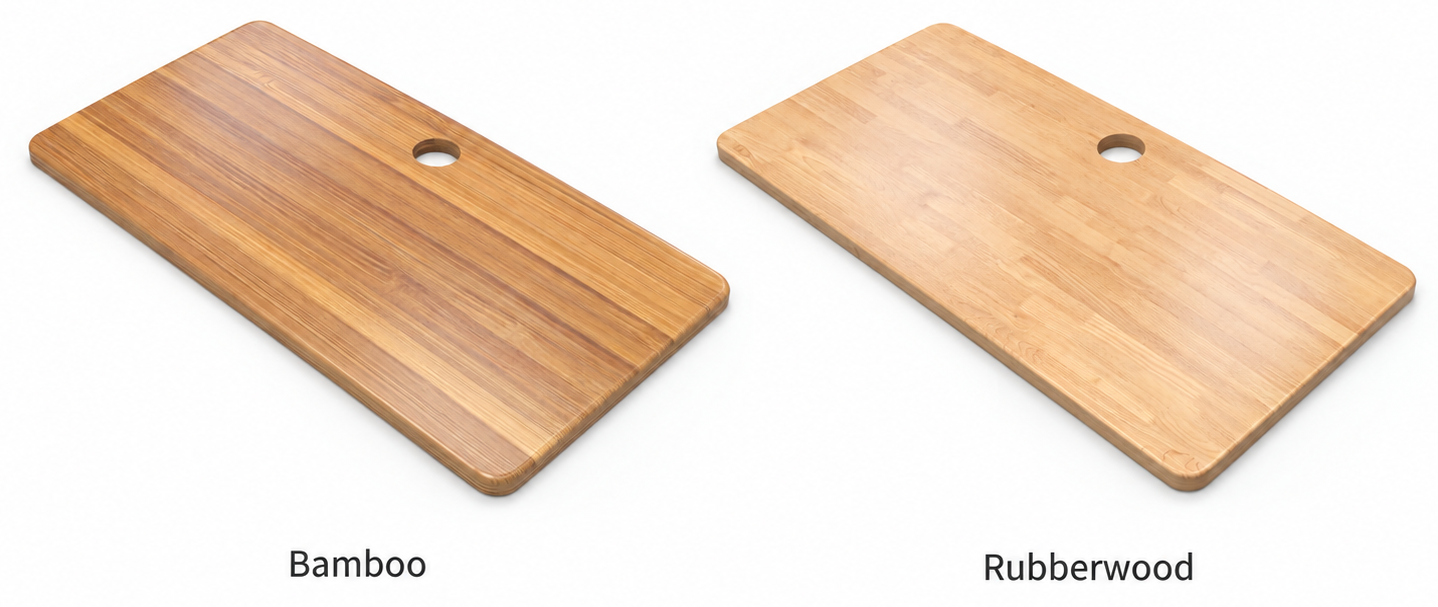
Bamboo vs Rubberwood: Quick Comparison
Here is a simple overview before we look at each material in more detail.
| Feature | Bamboo Desktop | Rubberwood Desktop |
|---|---|---|
| Look | Clean, modern, linear grain | Warm, natural timber appearance |
| Colour | Light to medium natural tone | Light oak-style tone |
| Style | Minimalist, contemporary | Classic, natural, versatile |
| Durability | Strong and practical for everyday desk use | Well suited to furniture and everyday workspaces |
| Maintenance | Easy with regular surface care | Easy with regular surface care |
| Sustainability story | Fast-growing renewable material | Plantation timber often sourced after latex production |
| Best for | Modern home offices, minimalist setups | Warm offices, natural timber interiors |
| Joy Desk sizes | 1200, 1500 and 1800 mm | 1200, 1500 and 1800 mm |
Joy Desk currently offers both desktop materials in 1200 × 600 × 25 mm, 1500 × 750 × 25 mm and 1800 × 750 × 25 mm sizes.
You can view the two options directly here:
What Is a Bamboo Desktop?
A bamboo desktop is typically made by processing bamboo strips or laminated bamboo sections into a stable board suitable for furniture.
Although bamboo is often grouped with wood in furniture discussions, it is technically a grass rather than a tree. One reason it is widely used in modern furniture is that it can be processed into strong, consistent panels with a clean appearance.
The International Bamboo and Rattan Organization notes that bamboo is a rapidly renewable material and can be harvested after reaching maturity in a relatively short period compared with many tree species. INBAR also identifies furniture as one of the major applications for durable bamboo products.
For desks, bamboo is especially popular because of its:
- clean linear grain
- light natural colour
- modern appearance
- suitability for minimalist interiors
- renewable-material appeal
A bamboo desktop works particularly well in bright home offices, Scandinavian-style rooms and setups with white or black desk frames.
Joy Desk's bamboo desktop is available in three common workstation sizes, making it suitable for compact home offices through to larger dual-monitor setups.
What Is Rubberwood?
Rubberwood comes from the rubber tree, Hevea brasiliensis.
These trees are primarily grown for latex production. Once latex yields decline, the trees can be harvested and used for timber instead of simply being discarded.
The Food and Agriculture Organization of the United Nations explains that rubberwood has become widely used for furniture and wood products because of its light colour, workable properties and plantation-based supply. FAO also describes rubberwood as a timber source that historically developed from plantations established primarily for latex production.
This gives rubberwood a distinctive sustainability story: the same tree can first produce latex and later become a useful furniture material.
Rubberwood typically has:
- a light natural appearance
- visible wood grain
- a warmer timber character
- good furniture-making properties
- a more traditional “real wood” look than bamboo
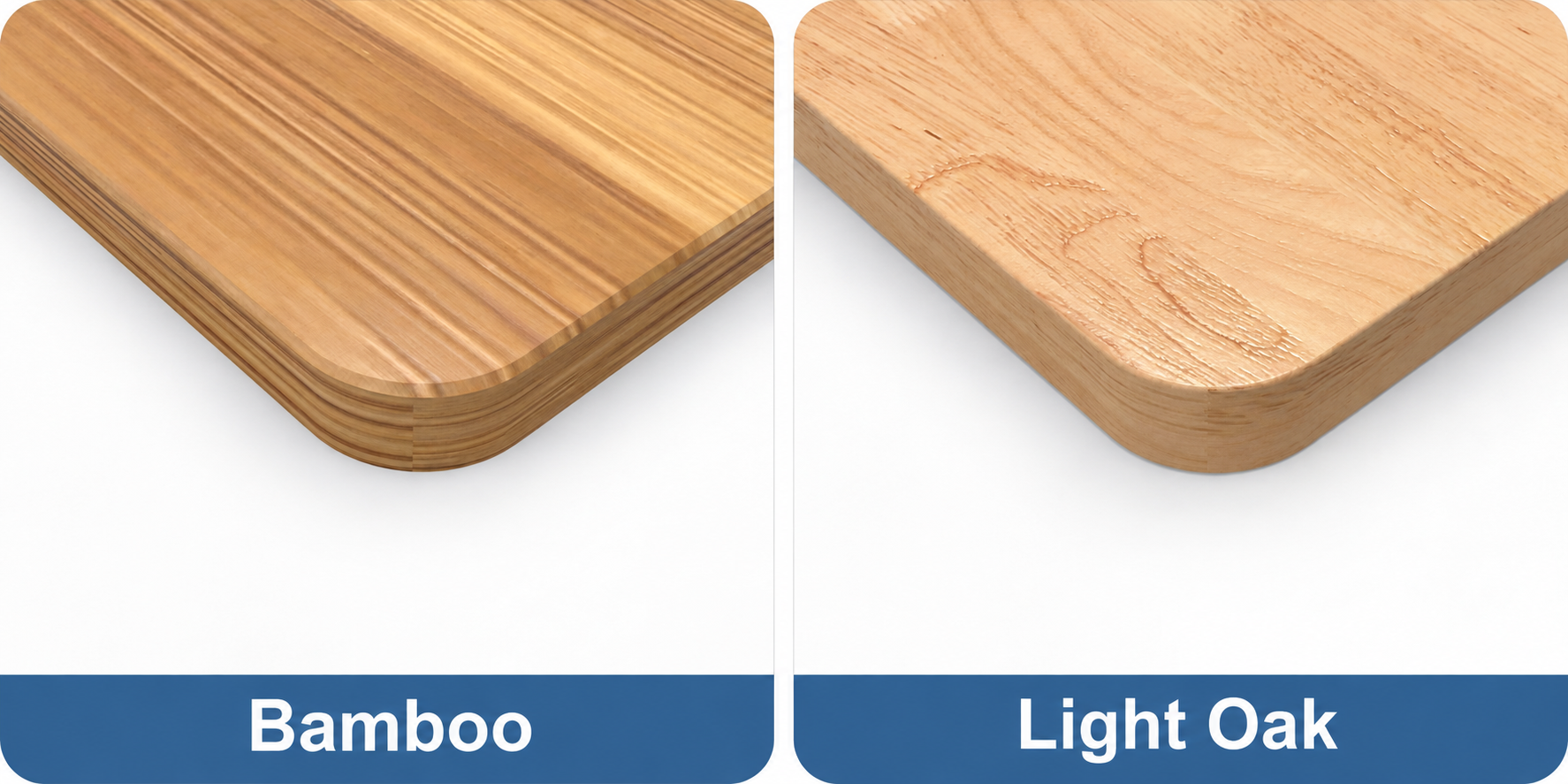
At Joy Desk, the rubberwood option is presented in a Light Oak finish, which suits both modern and more traditional office interiors.
Bamboo vs Rubberwood Appearance
Appearance is one of the biggest differences between these two materials.
Bamboo: clean and modern
Bamboo usually has a more uniform, directional grain.
This gives it a neat, contemporary appearance that works particularly well with:
- white desk frames
- minimalist rooms
- neutral interiors
- modern home offices
- clean monitor setups
If you like the look of light timber but want something slightly more distinctive than conventional wood grain, bamboo is a strong option.
Rubberwood: warm and natural
Rubberwood looks more like traditional timber.
Its grain tends to feel softer and more organic, which can make the workspace feel warmer.
It pairs especially well with:
- light oak furniture
- neutral or earthy rooms
- home offices with timber shelving
- softer interior styles
- professional office spaces
If you want your standing desk to look more like a piece of furniture rather than purely office equipment, rubberwood can be a very attractive choice.
Which Is More Durable: Bamboo or Rubberwood?
Both materials can work well for everyday desk use when they are properly manufactured and finished.
The more useful question is not simply “which material is stronger?” but whether the desktop is suitable for your actual setup.
For most home-office users, that means supporting:
- monitors
- keyboards
- laptops
- monitor arms
- speakers
- desk accessories
- normal daily writing and computer work
Bamboo furniture products are widely used because laminated bamboo can provide strong, practical material properties. INBAR describes laminated bamboo furniture as durable and suitable for modern furniture applications.
Rubberwood is also well established in furniture manufacturing. FAO notes that its machining characteristics, light colour and finishing properties have contributed to its widespread use for furniture and furniture components.
In normal desk use, either can be a practical choice.
What matters just as much is how you treat the surface.
Use a desk mat if you regularly move heavy equipment, avoid dragging metal objects across the desktop, and use pads under accessories that may create pressure points.
What About Water and Moisture?
Neither bamboo nor rubberwood should be treated as waterproof.
Like many natural-material furniture surfaces, both can be affected by prolonged moisture exposure.
For a desk, the most common risk is not humidity alone but everyday spills.
If you spill water, coffee or another drink:
- wipe it up promptly
- use a soft cloth
- avoid letting liquid sit around seams or edges
- avoid soaking the surface during cleaning
Timber and bamboo-based products can respond to changes in moisture and humidity, so stable indoor conditions and sensible cleaning are always preferable. WoodSolutions notes that timber and bamboo materials can expand or contract as moisture conditions change.
For normal indoor office use, this is usually easy to manage with basic care.
Bamboo vs Rubberwood Weight
Desktop weight matters more than many buyers realise, particularly on a standing desk.
A heavier desktop can feel substantial and premium, but it also contributes to the total load being lifted by the desk frame.
When choosing any standing desk setup, you should consider the combined weight of:
- desktop
- monitors
- monitor arms
- desktop PC
- speakers
- drawers
- accessories
Rather than choosing a material based on weight alone, check the lifting capacity of the standing desk frame you plan to use.
For example, Joy Desk's KING Pro standing desk frame supports up to 150 kg, depending on configuration, which provides plenty of capacity for typical office setups.
If you run a larger multi-monitor or workstation setup, frame capacity is generally more important than whether your desktop is bamboo or rubberwood.
Which Is More Sustainable: Bamboo or Rubberwood?
Both materials have a strong sustainability story, but for different reasons.
Bamboo sustainability
Bamboo grows quickly and can provide renewable raw material over relatively short growth cycles.
INBAR describes bamboo as a rapidly renewable material and highlights its use in long-life products including furniture and building materials.
This makes bamboo attractive to users who want a desktop made from a material with fast regrowth potential.
Rubberwood sustainability
Rubberwood has a different advantage.
Rubber trees are commonly grown first for latex production. Once latex productivity declines, the timber can then be harvested for furniture and other wood products.
FAO describes rubberwood as an agricultural by-product and a plantation-grown timber that has become an important furniture material.
That means rubberwood makes use of a tree that has already served another commercial purpose before becoming furniture material.
Neither material should automatically be labelled “perfectly sustainable” without considering sourcing, transport, adhesives, finishing and manufacturing. But both offer a compelling alternative to some conventional furniture materials.
Which Is Easier to Maintain?
In day-to-day use, there is not a huge difference.
For both bamboo and rubberwood desktops, keep maintenance simple:
- wipe dust with a soft cloth
- clean spills quickly
- avoid harsh abrasive cleaners
- avoid leaving standing water
- use a desk mat if you frequently move equipment
- use coasters under drinks
You do not need complicated maintenance for a normal indoor office environment.
If your desk is exposed to strong direct sunlight every day, you may also want to rotate accessories occasionally so the surface ages more evenly.
Bamboo vs Rubberwood for a Standing Desk
For a standing desk, either material can work well.
The more important factors are:
- desktop size
- thickness
- frame stability
- monitor setup
- total equipment load
- whether the desktop suits your room
Joy Desk offers both Natural Bamboo and Light Oak Rubberwood across its standing desk range, including the JOY Solid and KING Pro series.
Both desktop materials are available in:
- 1200 × 600 × 25 mm
- 1500 × 750 × 25 mm
- 1800 × 750 × 25 mm
That means you can choose your material independently from your preferred desk size.
For a compact home office
A 1200 mm bamboo desktop can create a light, clean setup without making a small room feel visually heavy.
For a standard everyday workstation
A 1500 mm bamboo or rubberwood desktop gives more room for a monitor, laptop and accessories.
For a larger setup
A 1800 mm rubberwood or bamboo desktop gives more space for dual monitors, speakers or a more equipment-heavy workstation.
Frequently Asked Questions
1. Is bamboo good for a desk?
Yes. Bamboo is widely used in furniture because it can be processed into strong, durable panels with a clean modern appearance. It is particularly popular for home offices and standing desks where a light natural finish is preferred.
2. Is rubberwood good for a desk?
Yes. Rubberwood is widely used in furniture manufacturing and has a light natural colour that takes finishes well. Its traditional timber appearance makes it a good choice for desks and other indoor furniture. FAO identifies furniture as one of rubberwood's major commercial uses.
3. Is bamboo stronger than rubberwood?
There is no simple answer because finished desktop performance depends on how the material is processed, laminated, finished and supported.
For everyday office use, both can be suitable desktop materials.
4. Which looks more premium?
That depends on your style.
Bamboo tends to look cleaner and more contemporary, while rubberwood tends to have a warmer, more traditional timber appearance.
5. Is rubberwood real wood?
Yes. Rubberwood is timber from the rubber tree, Hevea brasiliensis. The tree is first commonly grown for latex before the timber is harvested later in its productive life.
6. Is bamboo real wood?
Bamboo is not botanically a wood. It is a grass.
However, processed bamboo is widely used in furniture, flooring, panels and other applications in ways that are similar to timber products. INBAR identifies furniture as a major use of processed bamboo.
7. Which is better for a standing desk: bamboo or rubberwood?
Both can work well.
Choose based on appearance, workspace style, size requirements and your preferred material story rather than expecting one material to be universally better.