Seat height
42.5 cm
16.7 in · 1′ 5″
Comfort band 40.5–44.5 cm
Free ergonomic tool
Enter your height in centimetres or feet and inches. We estimate seat height from the back of the knee, and seat depth with a 2–3 finger gap so the chair supports the thighs without cutting circulation.
Recommended for 170 cm / 5′ 7″
42.5 cm
16.7 in · 1′ 5″
Comfort band 40.5–44.5 cm
42.5 cm
16.7 in · 1′ 5″
Comfort band 40.5–44.5 cm
Both settings fit a typical 40–54 cm chair with a 38–50 cm sliding seat.
These figures are a starting point from standard adult proportions, not a medical assessment. If you have an existing injury, ask a physiotherapist or occupational therapist to check the setup.
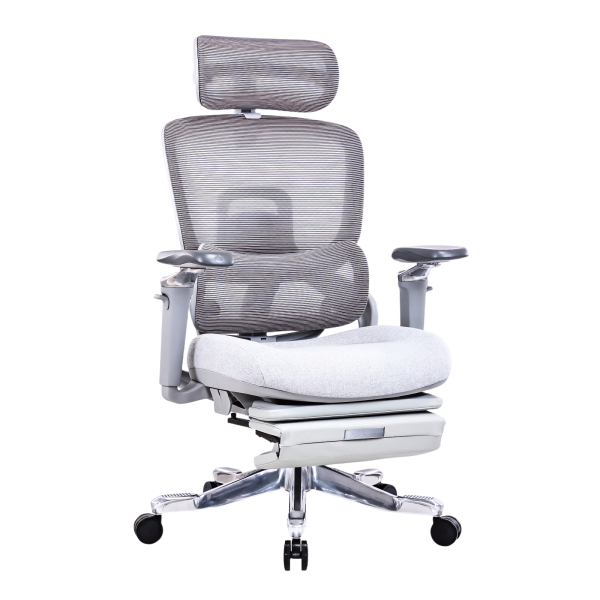
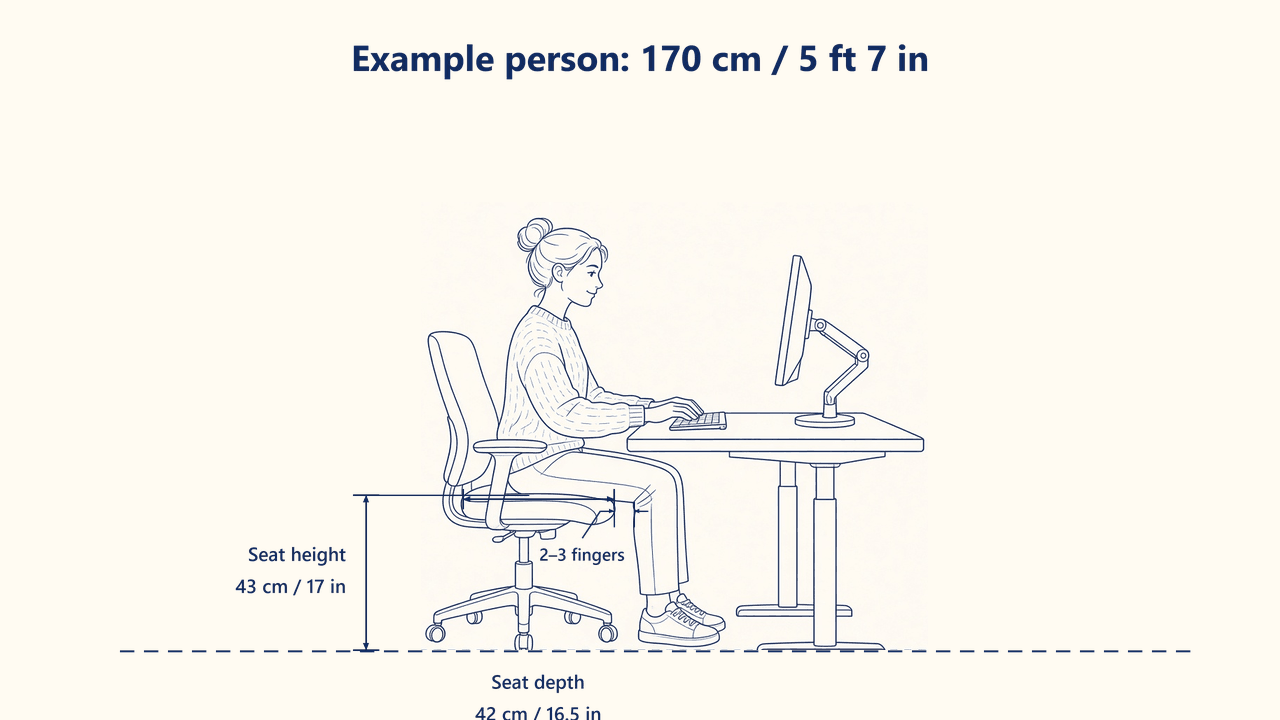
The illustration uses a 170 cm / 5′ 7″ person as an example: seat height around 43 cm (17 in) and seat depth around 42 cm (16.5 in), with a 2–3 finger gap behind the knee. Your numbers above replace those once you enter your height.
Stand against a wall without shoes, heels together, looking straight ahead. Mark the crown of the head and measure to the floor in centimetres. The calculator also accepts feet and inches.
Sit all the way back. Raise or lower the chair until both feet rest flat and the knees are about 90°, thighs roughly parallel to the floor. If the desk then feels high, add a footrest rather than raising the chair until your feet dangle.
Slide the seat so you can fit two to three fingers (about 5–8 cm) between the front edge and the back of the knee. Too deep and the edge digs in; too shallow and the thighs lose support.
With the chair set, raise the desk until the elbows sit just above the desktop. Use the standing desk height calculator for sitting and standing numbers, then set a monitor arm so the screen stays at eye line.
Seat height is the top of the compressed cushion to the floor. Seat depth is the usable pan from the backrest to the front edge. Convert centimetres to inches by dividing by 2.54 — the calculator shows both.
Sit back against the backrest. You should be able to slide two or three fingers between the front of the seat and the back of your knee. That gap (about 5–8 cm) stops the seat edge pressing on nerves and still supports the thighs.
Measure your body height without shoes. If you wear office shoes at the desk, tick the shoes option — it adds about 2 cm to the recommended seat height so your feet still sit flat.
A typical Australian office chair travels about 40–54 cm. That covers most adults. Users under about 160 cm may need a petite cylinder or a footrest; users over about 190 cm should look for a tall-cylinder model and a sliding seat.
Often yes. Slide the seat back or add a lumbar cushion to bring you forward until the 2–3 finger gap returns. Numbness that lasts should be checked with a clinician — this tool is a starting point, not a diagnosis.
Set the chair first, then the desk so elbows stay near 90°. A 170 cm person is usually around 43 cm seat height and 70 cm sitting desk height. Use both Joy Desk calculators together rather than copying someone else’s numbers.
Loading reviews…